Why I Chose to Adopt Instead of Buy a Cat?
In my first year studying in the UK, I spent a lot of time browsing rental websites.
But more often than not, I would end up scrolling through rescue adoption pages instead.
But I held back. My life was still unsettled back then.
I had not secured a stable flat or routine. I did not feel ready to take responsibility for a fragile little life.
I waited until after graduation, when I had started working in new media operations.
With a job and a more stable home, I finally felt able to consider the daily responsibility.
I filled out an application form with the RSPCA.
I knew it was time to welcome a furry roommate into my life.
Source check: 14 October 2026. The £80 fee and adoption story below are historical. Current RSPCA fees and arrangements depend on the centre and individual cat. RSPCA’s adoption guidance.
The Hesitation
I did hesitate at the very beginning.
I seriously considered buying a purebred British Shorthair instead.
I have always loved British Shorthairs. Their blue-grey fur. Round chubby faces. Calm, quiet temperament.
They seemed like the ideal cat for me.
I enquired with several local registered catteries.
The catteries I contacted quoted well over £1,000. These are undated recollections, not a universal price floor; they should not be treated as the same enquiries as the £600 starting prices mentioned in my shopping list.
Even after starting work, that was a huge financial burden. I could not comfortably take it on.
Worse than that, I kept reading terrible stories on local UK forums.
I could not verify the forum stories or use them to judge every breeder. They did remind me to ask where a cat came from and what care had been documented.
The Rescue Profile
Right around that time, a rescue volunteer sent me Bella’s profile.
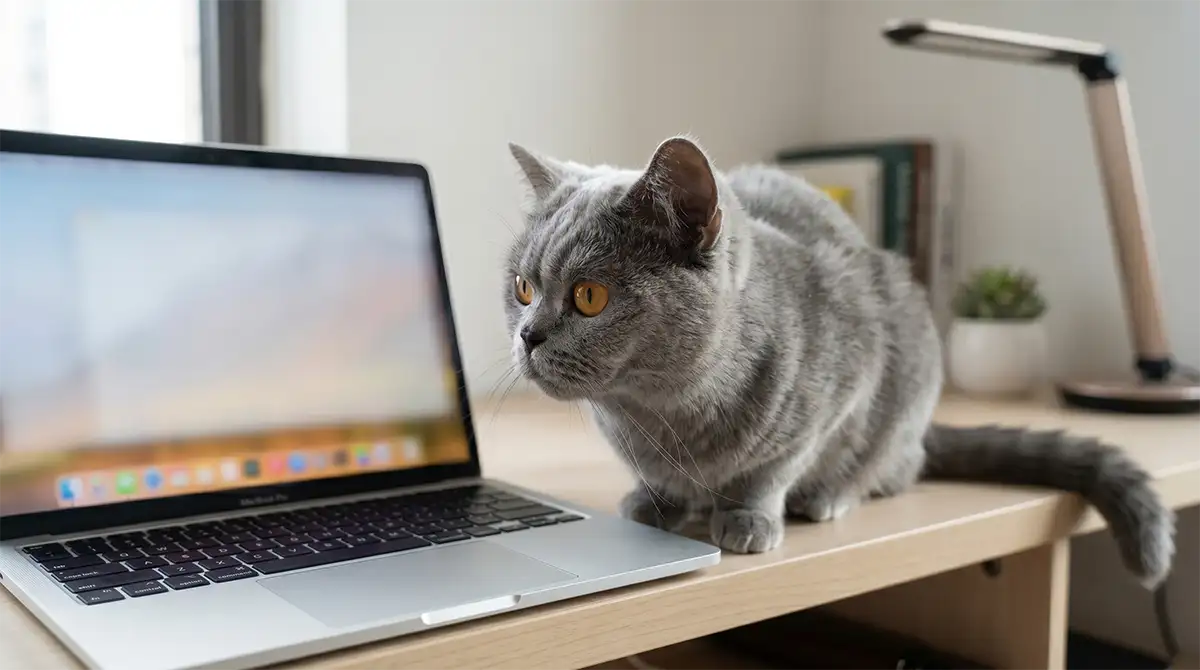
She was a female British Shorthair, about six months old when I adopted her.
She had been returned once before I adopted her.
I remember being reassured by the rescue’s health information.
I cannot confirm from her records which vaccinations or procedures had been completed. A routine check cannot guarantee freedom from every inherited illness or future infection.
Her adoption fee was £80. It contributed to rescue care; it was not an itemised measure of everything spent on her or a nationwide tariff.
I remember being offered familiar supplies, but I cannot itemise them without the adoption paperwork.
The rescue profile made me want to meet Bella in person.
Meeting Bella
The second I saw her, I knew she was the one.
I met Bella in the rescue’s cat interaction room.
Other energetic kittens were chasing feather wands. But Bella stayed quiet. Gentle.
She brushed softly against my trouser legs.
Then she curled up and settled on top of my shoes to nap.
I could see she was quiet during our meeting. I cannot infer how she had felt about being returned or reconstruct her appetite at the shelter.
I knelt down. Stroked her soft blue-grey fur.
She felt warm. Calm.
She nuzzled my palm gently. Let out a quiet purr.
In that moment, I made up my mind completely.
I wanted to give this quiet, timid girl a new home.
The Adoption Process
I applied through the RSPCA and completed the steps it asked of me. I cannot establish the exact timetable or whether a home check took place from the records I have.
My hands were shaking when I carried her cat carrier through my apartment door.
After waiting until I could care for her, I finally had a cat of my own.
The First Week
Bella hid under the sofa after coming home and seemed reserved at first. I cannot place her first approach or time in hiding precisely enough to turn it into a three-day rule.
I never forced her to interact.
I kept fresh food and water available at all times.
Every evening after work, I sat quietly on the sofa. Reading.
Occasionally, I talked to her in a soft tone. Let her get used to my voice and presence.
Slowly, she started to relax.
She first crept cautiously toward my feet.
Then she worked up the courage to jump up and sit beside me on the sofa.
The first-month diary tells more of that adjustment; the reason I chose adoption was already clear when I decided to give her time.
Why Adoption Made Sense
Many friends still ask me why I chose to adopt a rescue cat.
Instead of spending money on a brand-new purebred kitten.
Looking back on life with Bella, I am certain this was one of the best decisions I made in the UK.
Practical benefits
Bella’s £80 fee was lower than the undated breeder quotes I remembered, but it did not tell me what her lifetime care would cost.
As she has grown up, Bella has settled into her personality. Well-established good habits.
I appreciated her familiar litter-box routine and gentle moments. That does not mean she never scratched furniture or bit; behaviour depends on context, as my other stories show.
Her quieter moments fit my routine, even though I have described late-night bursts of activity elsewhere.
For someone juggling work and deadlines, her calm temperament makes her the ideal roommate.
The rescue’s support reassured me, but her own records are needed to confirm exactly what was completed.
Adoption does not rule out inherited conditions, infections or later treatment.
I still needed to plan for veterinary care; I cannot quantify bills that might otherwise have happened.
The rescue’s support
What mattered to me was having a rescue to ask about Bella’s history and needs. I cannot verify the friends’ bills or describe every private seller from those stories. Any follow-up support also depends on the individual rescue, so I would ask about it before adopting.
The Emotional Side
When I lived alone in the UK, coming home after work to Bella changed how the flat felt. That mattered to me as much as the difference between adoption and buying. It is part of my decision, not a promise that a rescue cat will solve loneliness.
Bella’s Second Chance
Bella had been returned once before I adopted her at about six months old. I cannot know how long she would otherwise have waited. Giving this particular kitten a steady home was a concrete reason I chose adoption.
The Truth About Rescue Cats
I used to hold wrong stereotypes about rescue cats.
I once assumed surrendered cats must have behavioural or health issues.
After meeting Bella and talking with rescue workers, I realised something.
Cats may be surrendered after life changes such as relocation, job loss or family emergencies. I do not have figures showing what proportion each reason accounts for.
I no longer take a return as proof that a cat is difficult. Bella has needed patience, medical care and changes to how I play with her, just as any individual cat might.
What I Would Check If Buying a Kitten
Documentaries and forum stories about irresponsible breeding made me wary, but they could not tell me how a particular breeder cared for their cats. If I were buying, I would visit the kitten where it was bred, meet its mother and ask for its birth date, health history and any breed-relevant test results. The RSPCA’s kitten checklist sets out those questions and advises against taking a kitten from its mother too early.
I chose adoption for Bella. That choice did not guarantee an easy cat or eliminate future veterinary costs; buying from a responsible breeder would also require looking at the individual kitten and its records.
My Advice
If you are ever thinking of getting a cat, please check your local rescue shelters first.
Rescues are not just full of mixed-breed strays.
Rescues may have pedigree cats as well as mixed-breed cats, with different ages, personalities and health needs. Bella was still a kitten when I adopted her; meeting the individual mattered more than a label.
For me, adopting through the RSPCA meant choosing Bella as an individual after I had a stable routine, and committing to her care beyond the £80 fee. She came back to China with me in 2026. If you are considering adoption, ask about the cat’s history and ongoing needs before deciding whether you can offer the right home.